Fremantle and finding the convict streak in me

There were around 167,000 convicts transported to Australia from the UK and now Republic of Ireland

My Great Grandfather and his brother were two of them.

Driven by the horrors and starvation of the Irish Famine, they resorted to stealing cattle and were sentenced to transportation to Australia for 10 years.

They arrived by ship in Fremantle in 1853 after a long and torturous voyage.

The gates of Fremantle Gaol greeted them. Built by convict slave labour to incarcerate convicts. Its a World Heritage Site along other buildings built by convict labour.

So I thought I should visit the spirit of my forebears

A wing of the old Fremantle Gaol has been turned into hostel accomodation. I booked a cell.

A double cell in fact as the wall between every second cell was knocked out to allow enough room to fit a modern single bed in.

So did my spirit mingle with my Great grand father’s? Well I don’t know but thoughts of him and his story of marrying and moving east as a frontier pioneer have certainly permeated my mind. Since I was in Fremantle.

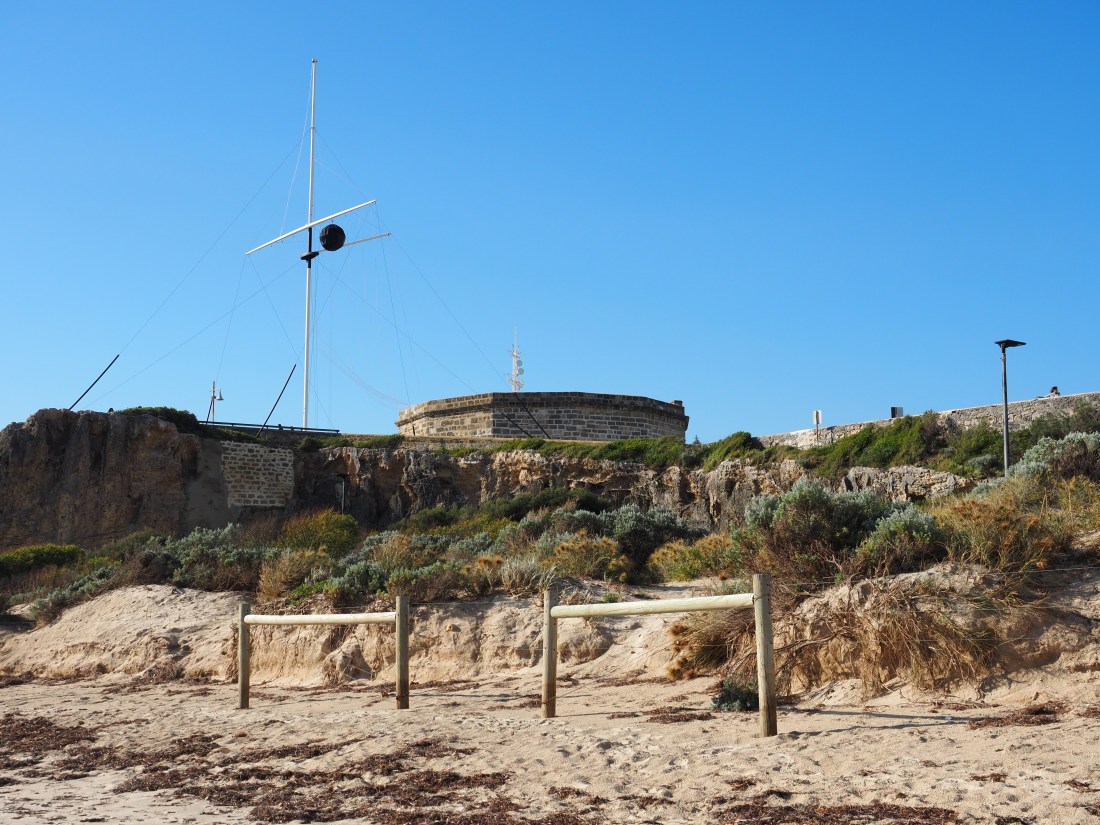
The Round House a prison fort was the first public building in the new Swan River Settlement later to become Perth.

The Fremantle Gaol soon followed as a major public building.

Fremantle is now a major port city of many beautiful historic building

But in 1853 the sight would have been very different for the 309 convicts who arrived with my Great grandfather.

After 110 days sailing from England on a putrid sailing vessel, where 10 convicts had died on voyage, the land that greeted them was dry brown and barren compared to Ireland.

But their home had been gripped with famine since 1845. During ‘The Famine’ its estimated 1 million Irish people died from hunger or disease related to malnutrition and another 1 million migrated to America, Australia and other destinations to escape starvation and British brutality.

For some of the convicts, the sight of the Australian landscape must have been frightening for others a lucky escape from a desperate life.

Their ship arrived in September, the start of Spring in Australia but where they came from the start of Autumn and the cold wet months of Winter. Did they even know that the next months would be hot and dry. Hotter than they had ever experienced.

My Great grandfather was convicted at the age of 20. Since 15 he had only known hunger. After being imprisoned for two years he was transported and at 22 he landed in the Great Southern Land.

So dear friends and followers now that I’m back in Melbourne and can publish from a laptop rather than a smartphone. I will take you, in the next few posts, from Fremantle on the trek of an Irish/ Australian convict pioneer as he and his family moved east with the expanding frontier of the Western Australian Colony in the second half of the 1800s.
Final reflections on Broome.

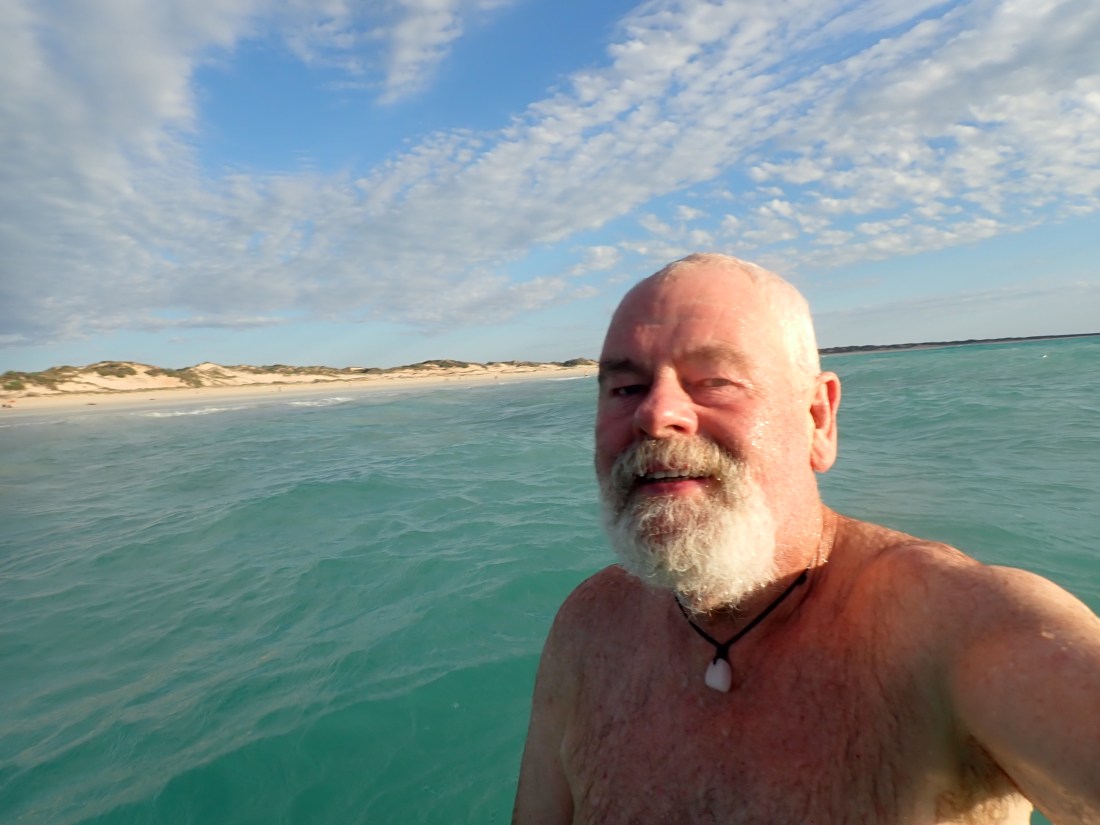
It’s my last evening in Broome and I finish the way I started with a swim at Cable Beach.

It’s been 43 years since I first came to Broome much has changed but something remain.

Like Sun Pictures, the outdoor cinema that has been in operation since 1916.

But the cultural aspects have expanded.

Art and Street Art abounds

Reflecting the history and character of the town.

Old building have been repurposed.

The old sail makers shed now part of the museum. Housing a collection of then and now photos.

Mmm 1978, yes that’s when I was last here!

And it’s the Kimberley so big Boad trees in the streets.

But its not perfect.

Somedays a Crocodile decides to put a stop to swims at the beach.

But at festival time there is music in the streets

Tomorrow the Steinbock will be loaded and I start the trip south.

Western Australia, is a huge state, about 1/3 of the Australian Continent.

It’s nearly 3000km to Perth, the states capital, and a further 3500km across the country to my home town of Melboure.

So Broome I’m sad to leave but there is more country to see.

Broome’s Festival of the Pearl – Shinju Matsuri

The lustre of pearl drove the colonial development of Broome in the 1870s and remains a major industry to this day.

Prior to this for millennia the aborigines used and traded mother of pearl shell and used it for decoration and ceremony.

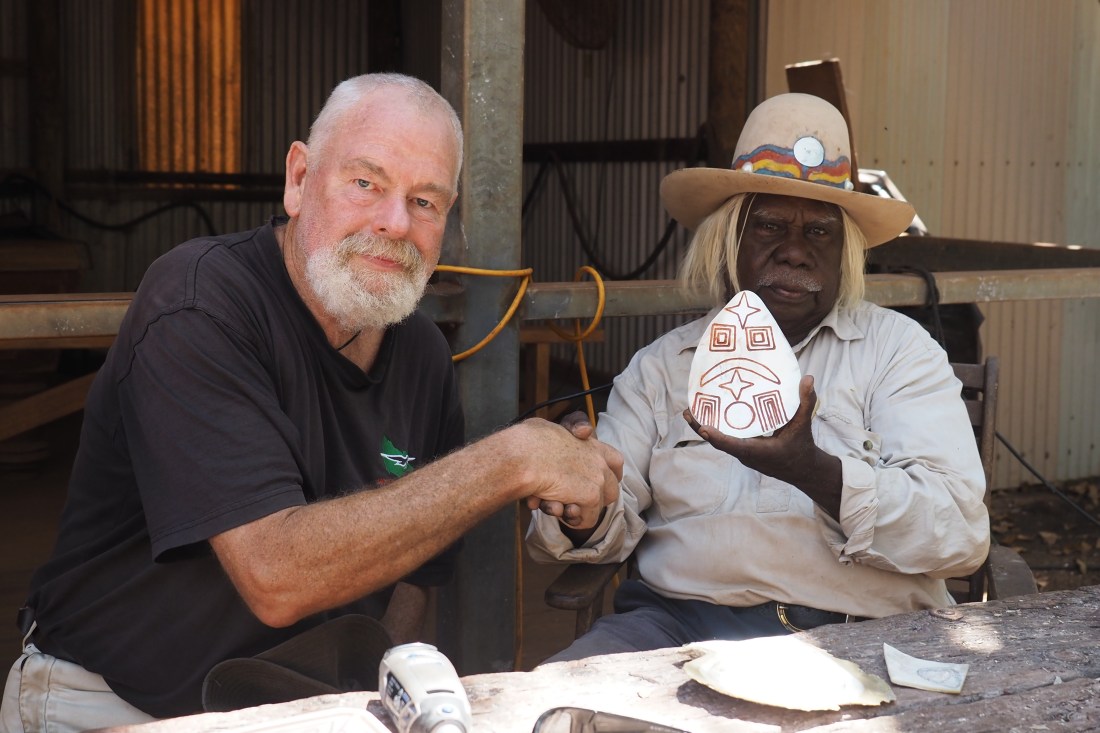
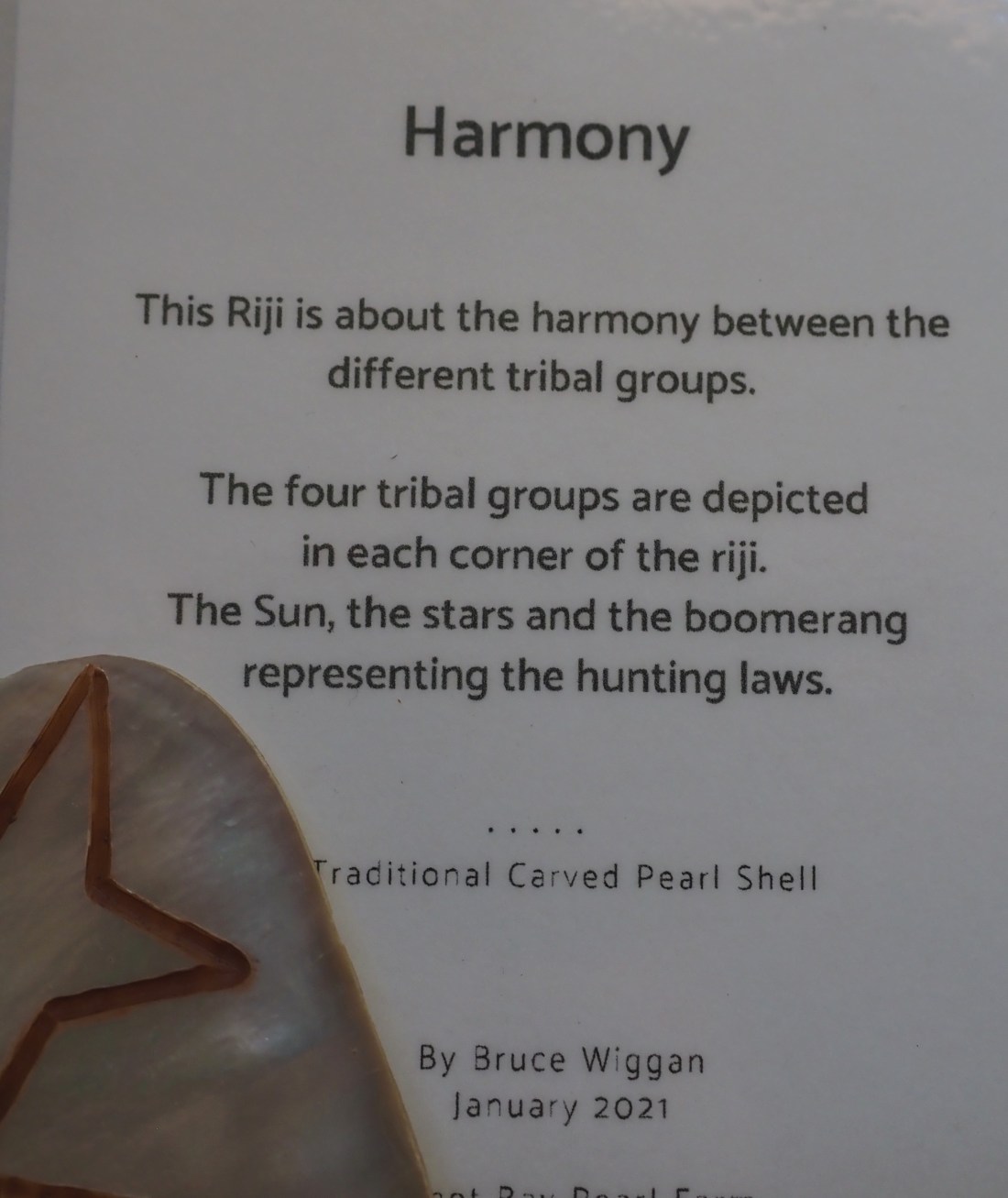
This Riji is the carving of pearl shell shell unique to the North East Kimberley.

These pieces of Riji are part of an exhibition called Lustre the history of pearling in Australia.

The Shinju Matsuri celebrates the role of the pearl in Broome.

The festival integrates culture of Japanese and Chinese pearl divers who came here over a century ago and made Broome home with indigenous and colonial history.

The lantern festival at Cable Beach captures a Japanese Tradition.

The street parade is led in a burst of colour and energy by the Chinese Dragon.

The Shinju festival also offers lots of exhibitions street music and art.

There is a beautiful projection down at the Town Beach

But it was the Riji that totally captivated me.

So I took a long ride, over 200km each way to the top of the Dampier Peninsula.

Over made roads and some thick sand roads

To meet Bruce Wiggan, a local elder and master pearl shell carver at his studio.

Aboriginal art tells a story. This piece tells the story of the making the laws of hunting between local tribes. These laws, this agreement bought harmony.

I’m now the keeper of this beautiful piece of Riji and it’s story.

Central Australia Adventure 5 – always will be Aboriginal Land!

Interpretation at Arkaroo Rock

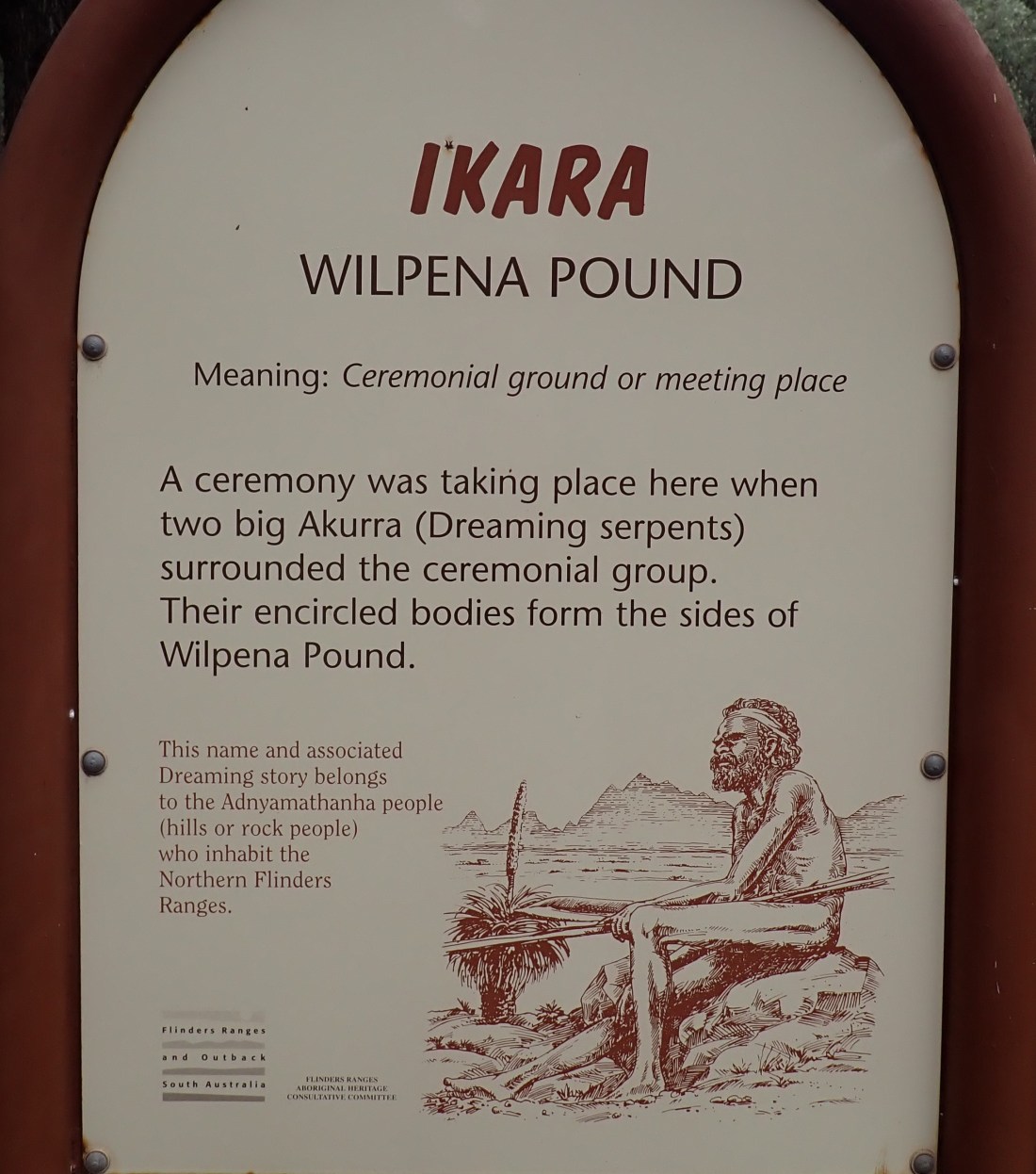
The Adnyamathanha people are the aboriginal custodians of the lands around Ikara, or the Flinders Ranges as the colonialists called this land.

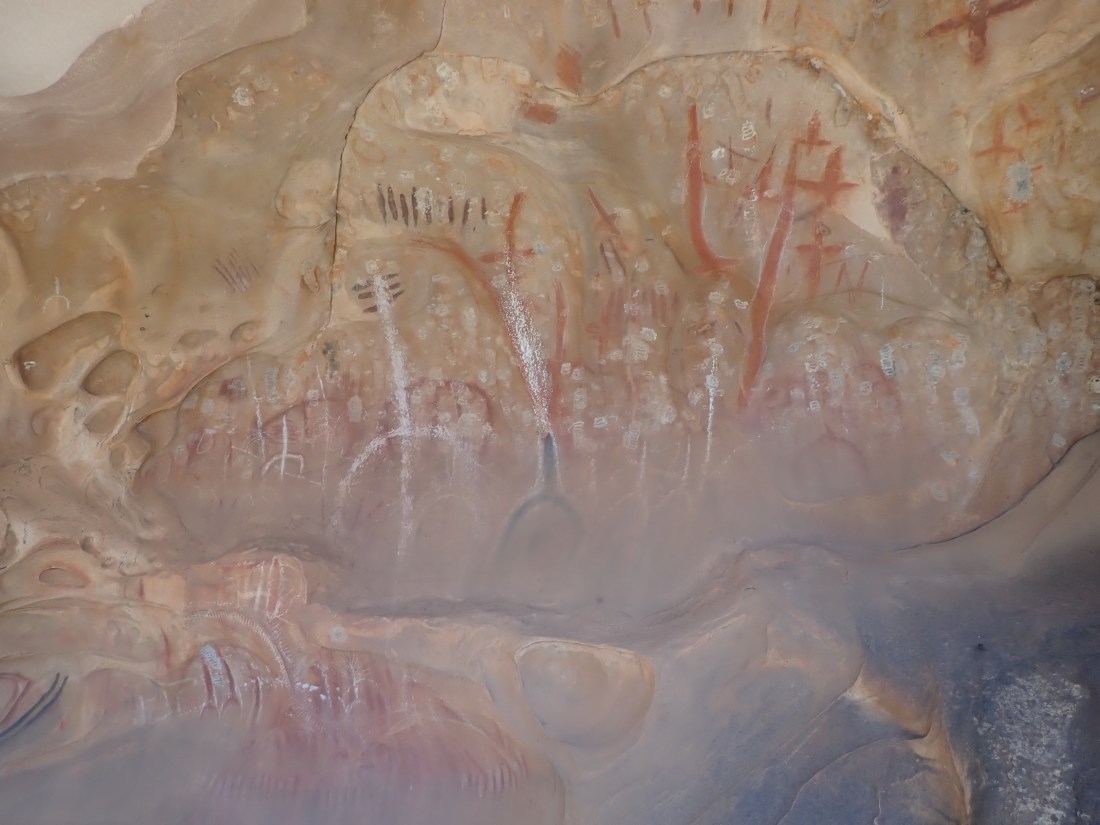
At Arkaroo Rock there are rock drawing that convey the dreaming stories of the Adnyamathanha.

These snippets from a large rock wall underplay the intricate linking of picture and storytelling that is contained on the rock wall

Stories such this one on the formation of Ikara.

Rock drawings change from region to region. The drawing in the Flinders Ranges differ to those in Kakadu, in Cape York and in other parts of Australia.

Each reflecting the stories and dreaming of the local Aboriginal people.

They also differ over time.

The rock etching in the Sacred Canyon and at Willow Springs being much older than that rock drawings are believed to predate the current aboriginal custodians of the land

For me the walk into Sacred Canyon is very spiritually moving.

Lets make sure we recognise and cherish this ancient culture that has lived in one with the land

Central Australia Adventure 4 – Wilpena Pound

Wilpena Pound National Park lays at the centre of the Flinders Ranges.

In many ways an oasis on the edge of the outback

To climb one of the lookouts or scale a peak is to gain a breathtaking vista like the view from Wangara Lookout below

Though the tracks can be a little testing, especially if a bit of light rain makes them damp.

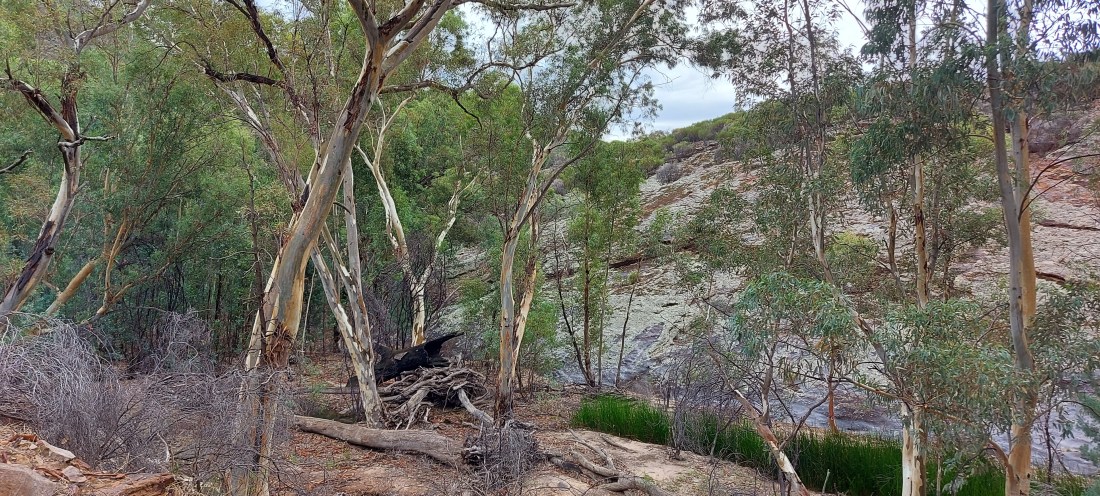
Inside the Pound the forest is cool with towering River Gums and shady Native Conifers

And of course there is the Wilpena Homestead

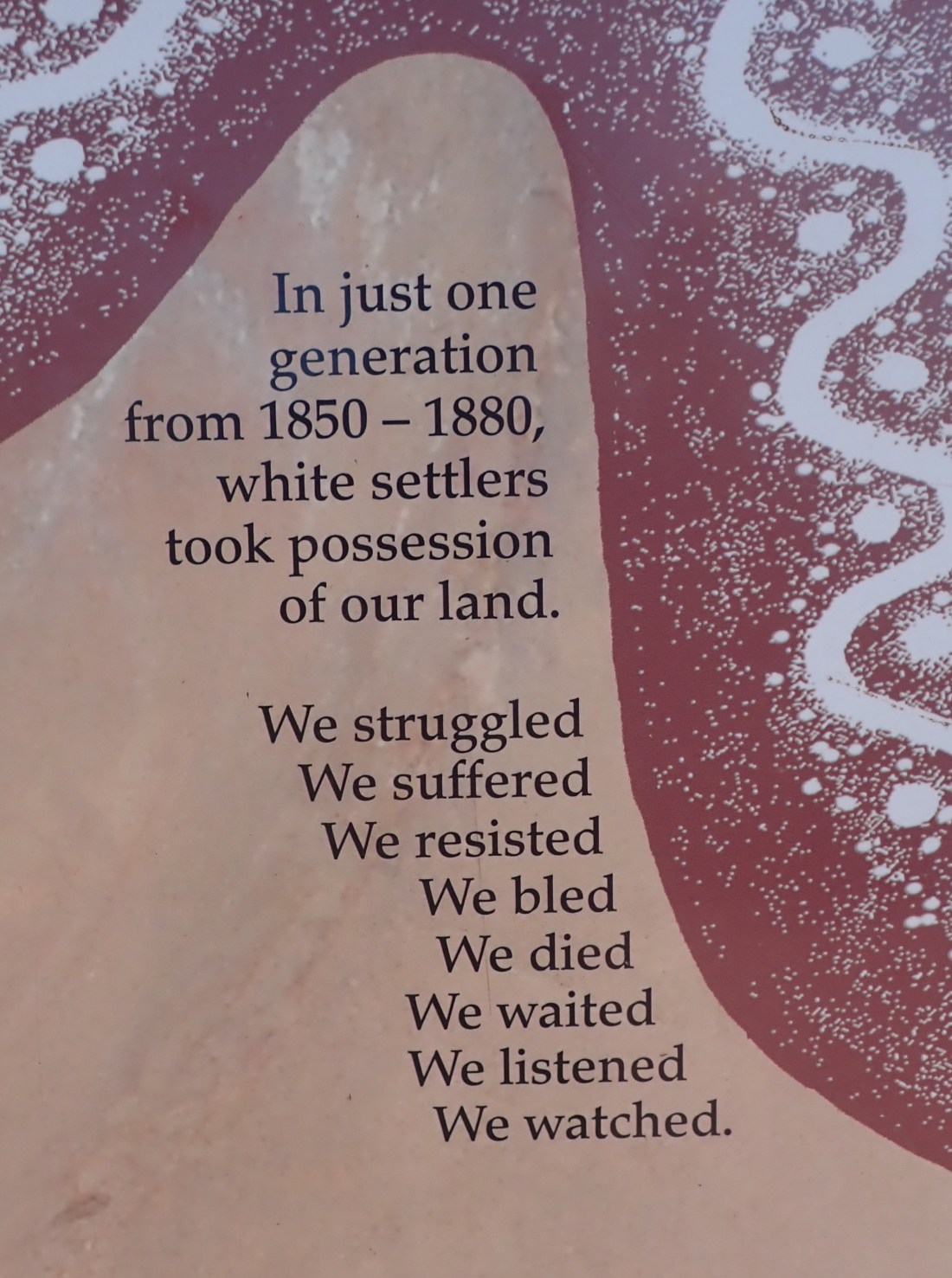
I’m.many ways a simple pioneers building but a symbol of devestation in many ways for aboriginal Australians.

But that is a story for another blog.

The beautiful campground offers a shady rest for the adventurer.

Aerial view of Wilpena Pound sourced from the internet