Final days on the Atlantic Coast of Morocco-Volubilis Moulay Bousselham and Asilah

From Fez to the Atlantic Coast one passes Volubilis, the ruins of a Roman city close to Meknes. The site is most recognised for its intact mosaic floors.

Volubilis was basically deserted when Fez became the centre of power in Morocco.

The northern part of Morocco between the Atlantic and the Mediterranean is rich fertile farming land.

Moulay Bousselham is a small fishing town on the Atantic coast with a large inland lake which is a major site for endemic and migratory birds.

The ocean here is quite wild and the beach strewn with rubbish so the estuary is the towns main attraction. As well as the fishing boats and market.

And it’s at the fish market that you may find a guide to take you bird watching. Or more accurately he will find you as you stop at the gates of the camping ground that has closed down.

But the Moulay Bousselham estuary is a fantastic site for bird watching and a 3 hour boat tour with Khalil is great. You see;

Greater Flamingos

Spoonbills

Egrets

And an array of gulls, terns, storks, cranes and plovers.

The Atlantic here is wild a steep shore and cross currents from the tidal river making it treacherous.

The estuary provides a safe place to swim after unfortunately picking a path through the litter.

It is such a beautiful beach such a shame the litter is so overwhelming.

Asilah is another beach town a couple of hours north of Moulay Bousselham along the coast. It’s also only a short ride from Tanger and the last night in Morocco was spent there.

The Medina, built within the old Portugese fort is mainly residential with a strong art presence. It was in Spanish control into the 1970s and still retains a strong Spanish influence.

I think I can leave my tales of Morocco here. What an amazing journey saw so much but I feel I missed so much more.

There was Belgian couple at the Hotel in Rissani. They had travelled to Morocco 9 time 7 on a motorbike. Mmm so Im thinking a second trip will not be too indulgent!!!

Porto

It’s hard to know what to write about Porto I’m sure many many words have written about: the wine, the amazing River Douro gorge that the city is built around, the buildings and the churches.

Agh the churches. I think I’ve had enough of them. Another catholic evangelistic warlord going off and subduing and plunderingzx happy and peaceful first nations people all in god’s name.

But I did visit some churches. But I think too many European cities I am suffering Church Fatique. (Unreported visits to Barceona and Madrid laid the grounds for church fatigue!)

Luckily to conteract the Church Fatique there was a Banksy exhibition.

But as a boy born and bred in Melbourne, Australia. A city famous for its trams. A tram ride along the Douro River to the beach was a must.

The mouth of the river is quaint with a smallish beach and the Atlantic Ocean is still cold!

The tram ride is a scenic tour in itself along the river…

I have an observation developed over time. If you want to have something to eat with the view don’t expect anything to exciting food wise. The best food is most often without a view. This rule played out in Porto. The resturaunts with tables along the river offered the same blend of ‘traditional’ Portugese cuisine. But on the riverside in the in amongst the wine caves there is the little municipal market building. Here there are stalls of fresh produce and traditional and modern Porttugese food. But no view!

The best resturaunts are up the steep hills away from the river. The food fresh and fantastic.

But book if you want to go to a great place like Maria Rita or you will be queueing with locals and tourists alike waiting for a table to become free. Inside there is not a rush and a great selection of wines from.the Douro region and local produce.

So what is the must do thing to do in Porto?

Get your photo taken with the city as a backdrop. Lol

UPDATE

Thanks to a a follower an update. I should mention the Railway Station and its murals. They are impressive.

Some beautiful scenes of rural and river life.

But even in the railway station you can’t escape the glorification of the conquering and enslavement of peace loving native people in god’s name!

What a difference a Cape makes. The Atlantic Coast of Algave

Cape St Vincent (Cabo de São Vicente) is the most Southwesterly point of the European Continent. It’s juts out into the Atlantic at the bottom tip of Portugal. It’s funny to think that only few weeks back I was at the North West tip of Africa.

East of the Cape the coast gently curves toward the Gulf of Cadiz with its generally warm calm waters. (As seen in the previous blog)

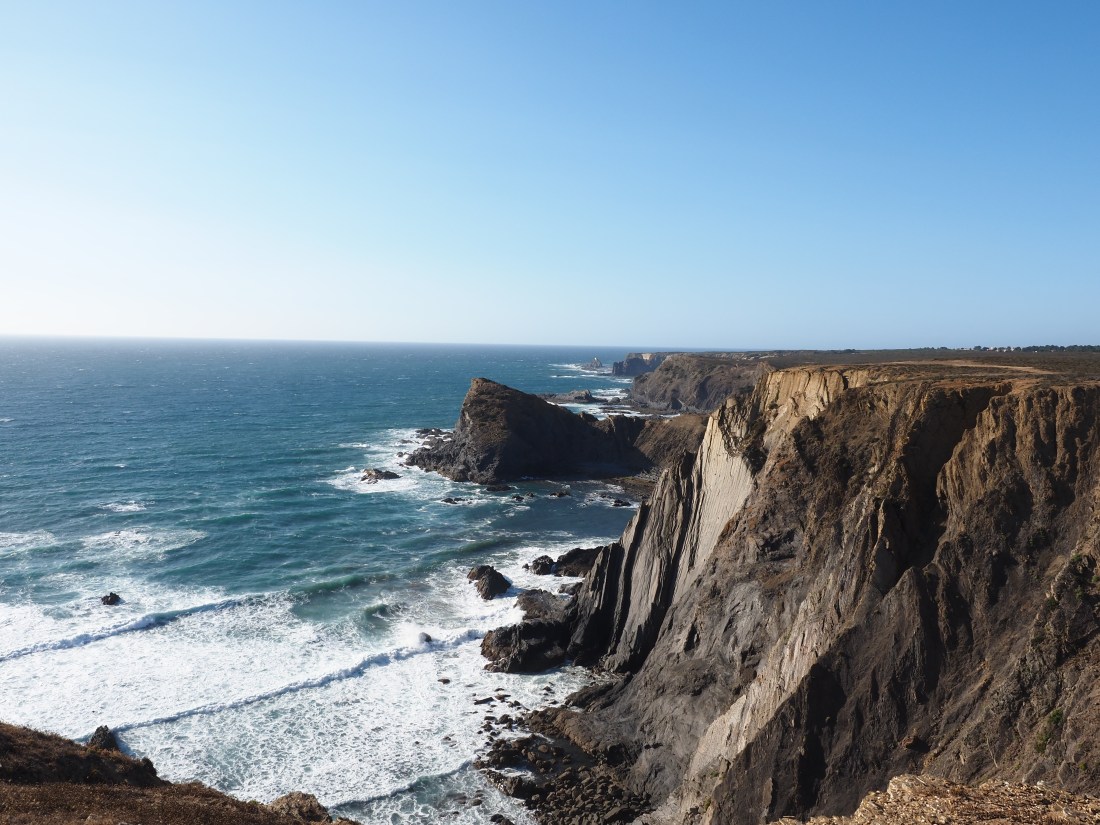
To the west and north the Atlantic up to its reputation of icy cold waves and wild beaches.

The beach at Carrapateira a wild wahing machine of a place.

Arrafina is a lot less wild. sheltered by a headland with a little fishing port giving some shelter from the wind and a better set of waves.

Is the water icy? Well at under 18c it’s chilly but not as cold as the Southern Ocean off the Victorian, Australia coast where I have swum for many years.

But not intolerable!

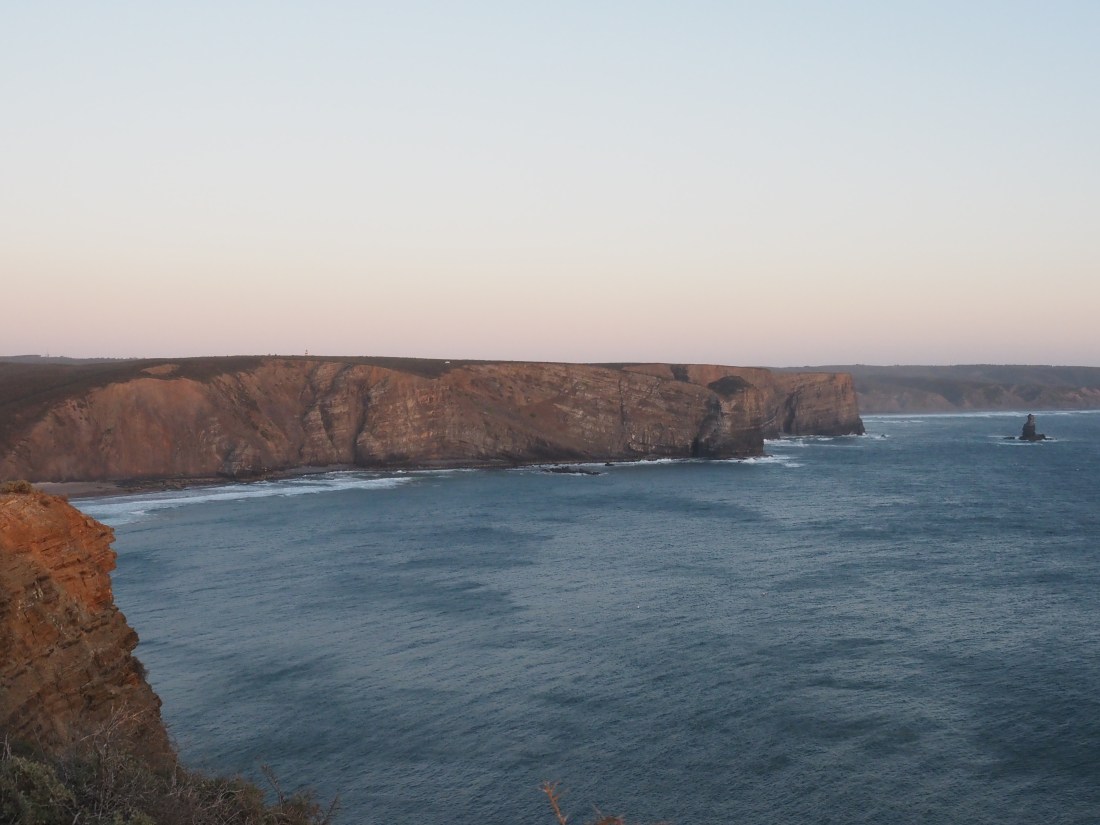
The cliff top provides amazing views up and down the coastline.

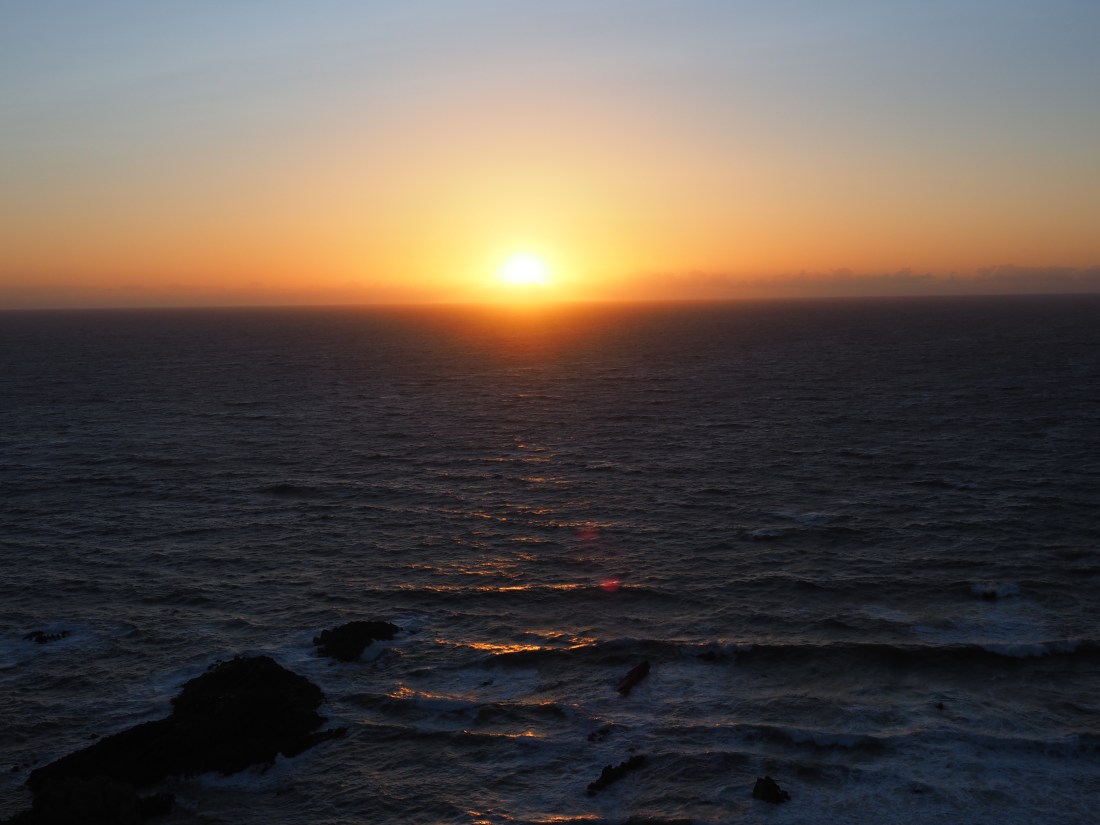
And of course facing west the clifftop provides a great sunset viewing platform.

Riding through the Algave Region of Portugal

The Rio Guadiana forms the southern border between Spain and Portugal. These days there is a major bridge at the southern end of the river linking the two countries but for centuries travel by boat crossing the river between villages such as Alcoutim in Portugal and Sanlúcar de Guadiana in Spain.

My friend Stephane has a house near the Rio Guadiana and has been a wonderful guide of the area. An area favoured by motocyclists and walkers alike.

For many years both Portugal and Spain were Authoritarian Countries with Dictators. Salazar in Portugal and Franco in Spain. In such an environment border smuggling flourished.

The movement of contraband across the border is celebrated along the Guadiana.

The beaches near Cacela Velha are wide, and sandy with clean cool water.

In land the rolling hills provide spectacular views. The cork trees covering them harvester every 8 years. Cork is truly a renewable resource. No tree is felled or damaged in its production. The oldest known cork tree is over 230 years old and still produces.

The small towns and villages along the coast and in the hills offer great sightseeing and wonderful little restaurants serving a variety of local Portuguese cuisine. Be adventurous cause there is more to Portuguese food than cataplana.

The Atlantic Coast of Morocco

Mirleft is a lovely village on the Atlantic Coast between the cities of Agadir and Sidi Infi. While it is a small village now there is a lot of building development happening and in a short time hotels and resorts will dominate the beaches.

To get to Mirleft I chose a route through the Anti Atlas to Tiznit from Imlil in the High Atlas. This route was over small back roads and villages and avoided the business and hub bub of Marrakech. The type of thing I like. It’s an easy day ride this way from the High Atlas to the coast.

Between Mirleft and Legzira and its famous arches if you keep your eye out you might just find a rough dirt track leading down to the a deserted beach where you can find a deserted piece of the African Atlantic Coast.

The coast like between Mirleft and Sidi Infi is dramatic and beautiful, especially the rock arches around Legzira. Some of which you can only see from.the clifftop edge.

As I said Mirleft is changing quickly. The centre of the old town it’s own charm with the main street a line of blue painted arches.

One of those blue arched building houses a licenced premise. A different type of oasis in Morocco!

Well friends and followers there are more tales of Morocco to come over the last couple of weeks I’ve been in Spain and now Portugal. So time to change focus and enjoy the moment.