The long ferry ride from Santander in Spain and Portsmouth in England is a good place to catch up on the Moroccan blog.
Fez was my major city experience in Morocco. I couldn’t neglect Morocco’s oldest city, home to the world’s oldest University in the labyrinthine Medina.
Fez is a big bustling city and here I encountered the motorised tout. The motorised rides along besides you on a nippy scooter talking away about where you from, how long have you been in Morocco etc etc. Meanwhile I’m trying to navigate the Moroccan traffic and follow the directions instructions from the GPS. Just as your totally bamboozled the the key question comes. ‘Which hotel are you staying at?’ I divulge the name and next thing the full loaded Mighty Breva following a little scooter nipping through the streets of Fez.
At the hotel, next morning at the cafe across our registered guide will be waiting to lead a private tour of the old city.
He was a great guide and navigating the old Medina without a guide would really be a challenge in navigation and interpretation.
The leather dying vats are an iconic part of the old city.
As is the camel butcher.
The copper smiths
The fabric sellers
And the winding alleyways and heavy doors that the porte to Mosques, Synagogues, residences of the rich and poor
Of course one of those doors leads to the oldest university in the world.
From the high points of the city you can gain a view of the Medina by day
And by night
Inside the Medina the roof of the carpet seller gives a good view across the roof tops.
Did I say carpet seller??? Whoops I bought another rug!!
Fez was the Moroccan city I really wanted to visit and if didn’t disappoint. Maybe a different city next time.
It’s hard to know what to write about Porto I’m sure many many words have written about: the wine, the amazing River Douro gorge that the city is built around, the buildings and the churches.
Agh the churches. I think I’ve had enough of them. Another catholic evangelistic warlord going off and subduing and plunderingzx happy and peaceful first nations people all in god’s name.
But I did visit some churches. But I think too many European cities I am suffering Church Fatique. (Unreported visits to Barceona and Madrid laid the grounds for church fatigue!)
Luckily to conteract the Church Fatique there was a Banksy exhibition.
But as a boy born and bred in Melbourne, Australia. A city famous for its trams. A tram ride along the Douro River to the beach was a must.
The mouth of the river is quaint with a smallish beach and the Atlantic Ocean is still cold!
The tram ride is a scenic tour in itself along the river…
I have an observation developed over time. If you want to have something to eat with the view don’t expect anything to exciting food wise. The best food is most often without a view. This rule played out in Porto. The resturaunts with tables along the river offered the same blend of ‘traditional’ Portugese cuisine. But on the riverside in the in amongst the wine caves there is the little municipal market building. Here there are stalls of fresh produce and traditional and modern Porttugese food. But no view!
The best resturaunts are up the steep hills away from the river. The food fresh and fantastic.
But book if you want to go to a great place like Maria Rita or you will be queueing with locals and tourists alike waiting for a table to become free. Inside there is not a rush and a great selection of wines from.the Douro region and local produce.
So what is the must do thing to do in Porto?
Get your photo taken with the city as a backdrop. Lol
UPDATE
Thanks to a a follower an update. I should mention the Railway Station and its murals. They are impressive.
Some beautiful scenes of rural and river life.
But even in the railway station you can’t escape the glorification of the conquering and enslavement of peace loving native people in god’s name!
Setubal is a small waterside city just south of Lisbon where the Rio Sado meets the Ocean
Across the estuary is the is the holiday area of Troia. Coming up from the south it’s a beautiful ride along the Peninsula with a car ferry trip to Setubal.
The estuary is a major sanctuary for birdlife as well as contributing to Portugal’s self sufficiency in rice.
It’s was a beautiful dawn to watch birds in the morning.
And go for a ride along the coast in the afternoon.
Have a bit of a swim and a beer at the MotoCultureClub bar.
It’s a picturesque ride through the mountains from Setubal to Coimbra. Especially once you get free of the traffic around Lisbon.
Coimbra is a university one of the oldest in the world. Perched in the mountains inland between Lisbon and Porto.
The university sits up on the high point of the city being seen and seeing!
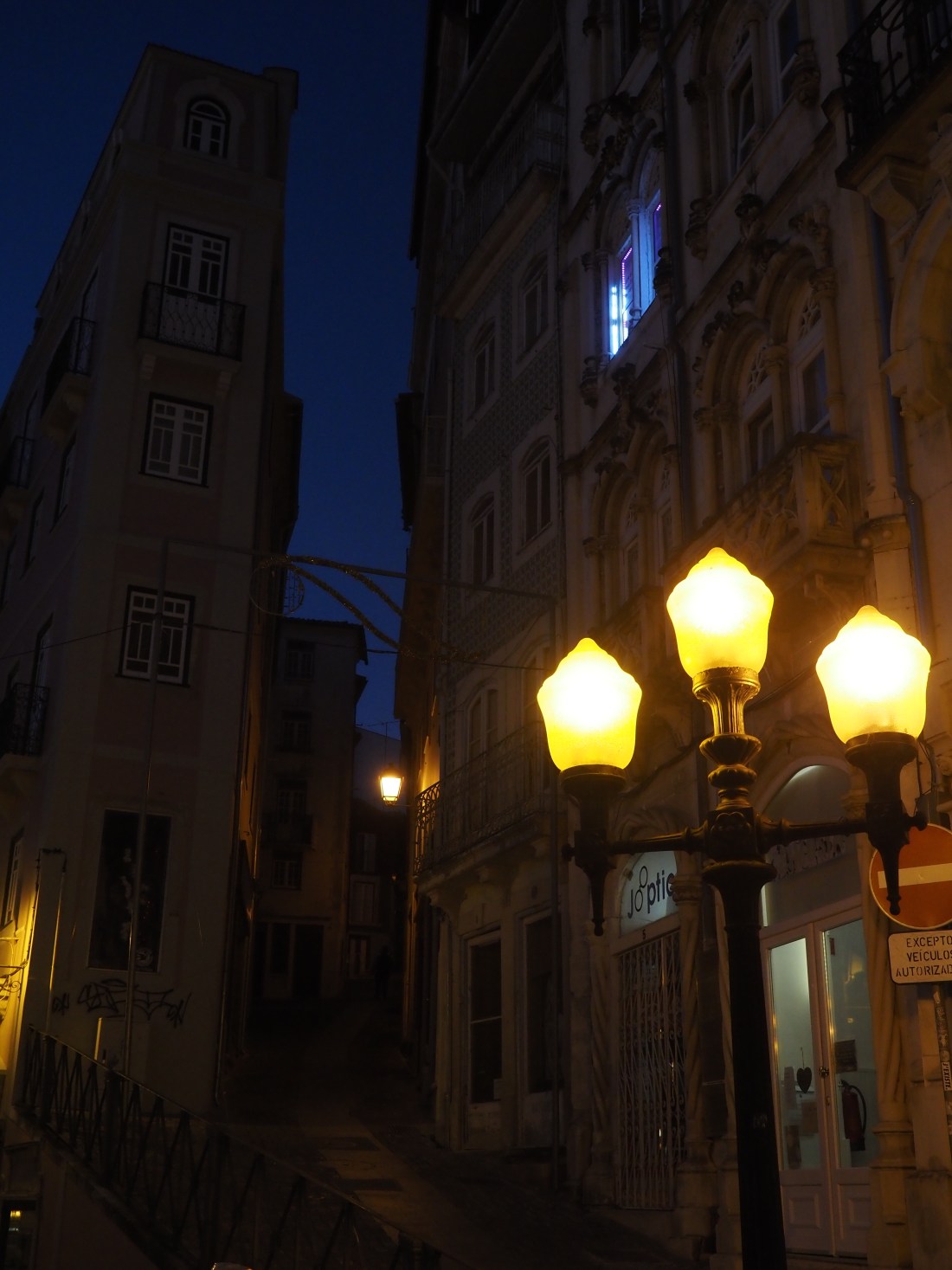
Climbing the steep steps and alley ways is good training for the steep cliffs of Porto or an Alpine hike depending on what your plans are!
Every night Fado plays in a little Bar at the base of the old town.
Well readers you can see why this blog is called a discontinuous narrative as I bounce back a few posts and rejoin the tale of my Great Grand Father Edmund Cahill and his pioneering life in Western Australia.
The rolling hills around York and a ready water supply from the Avon River made the area favourable for grazing and by 1851 convicts, like Edmund, were sent to the area to expand the settlements and to colonise the lands.
Convicts built new settlements like Toodyay 64 km, north of York, where the old mill and hotel show its early prosperity. Northam become the major town in the district when the trainline to the gold towns further west was routed through it.
Settlements like Greenhills have all but disappeared with only the old pub left.
Others like Beverly have reborn as areas of tourism and art.
As settlement spread more and more the Ngoongar Aboriginal people were displaced. But they never ceded their land.
In the 1847 Spanish monks had established a monastical village, New Norcia as a base for missionary activities in Western Australia. It was here the many aboriginal children stolen from their parents were trained as maids and servants and deprived of their own ancient culture.
In Northam the Bilya Koort Boodja Aboriginal Cultural Centre provides in its building the story of dispossession, the frontier wars and the families broken and the children taken away.
Images from Bilya Koort Boogja web site
The treatment of the Australian Aborigines, the disrespect for and destruction of their culture, is in my view marks the worst aspect of European colonisation. It was a brutal destruction. I think there is nothing more emblematic of the destruction of the culture than the stealing of Aboriginal children form their parents, a process that was undertaken in Australia for 100 years from 1869 -1969 as part of the policy of Australian Governments.
Despite it all this, below is the last piece a visitor reads before leaving the centre.
Edmund and his brother were most likely part of this dispossession as they successfully farmed their land. Young Irish convicts themselves stolen from their family and land, having been driven to stealing by the famine and the seizing of crops and livestock by the English overlords . Transported from their homeland that had been struck by famine and forced on a long dangerous voyage to the hot dry strange land.
They also pined for home. The Tipperary School in York an example of the Irish calling out to home.
But for Edmund, his wife Bridget and family, success in farming wasn’t enough and when in 1887 gold was found nearly 300 km west of York followed the gold rush to the new settlement of Southern Cross. In Southern Cross there is a monument to the pioneers. The Shovel and Pick representing the miners and the Scythe and Rake representing the farmers.
In moving to Southern Cross they really did start a new life. Edmund changed his name to Edward and claimed to be 10 years younger than his age. Why he did this is unclear. Whether it was to escape his convict past or to make himself available for a position suitable for a younger man or some other reason, Im left to guess. Its a sign of the times that a man who was prominent in society could make such a change.
Edward lived in Southern Cross until his passing on 24 April 1895 at the reported aged of 55. (but he was born in Ireland in 1830 so really 65). On the edge of Southern Cross there is a list of those who were buried in the original cemetery (now destroyed)
In the Southern Cross Museum I found a transcript of Edmund/Edward’s obituary which had been posted in the Southern Cross Herald. It states he was ‘one of the first residents of the town’, ‘was held in high esteem’ and ‘was a former resident of York’.
But the family had contracted gold fever and following Edmunds death Bridget and her two youngest children, Patrick (My Grandfather) and Michael with their families headed further east, to the edge of the desert, chasing gold that had been found in and around Kalgoorlie. That’s a tale for another time.
In my journey through Australia last year I was determined to make myself open to Australian Aboriginal culture and through that make my own connection to the land. It has been an experience that has affected my greatly and has allowed me to at least have some understanding of aboriginal connection to the land and how beautiful and powerful that is.
Seeking out my family history at the same time allowed me to feel the longing for their homeland my fore bares felt and to some small extent maybe I do. Maybe its my once ginger hair which is part of the Celtic gene that makes me feel that way.
I have travelled to Ireland twice and will likely return again. On my last visit there, (look for Ireland in the drop down menus) I was in a pub in Bantry. I had just finished a pint of Guinness when another was plonked in front of me. I looked up at the barman and was about to speak when he said – ‘the boss said you have an Irish head on ya, this ones on the house’ – says it all really!
The area around Fremantle and upstream in the Swan River to Perth is quite beautiful.
Beautiful sandy beaches flank the mouth of the Swan River and its bustling Port.
From Kings Park there are views over the River and the City of Perth
Kings Park includes the Perth Botanic Gardens and its amazing native flora collection.
Not that my Great grandfather would have had time to enjoy any of these beautiful sights as his home was Fremantle Gaol. From his arrival in 1853 until he and his brother were given a pardon in 1855 they worked, like all convicts on the gaol. The limestone extracted from the site of the gaol and cut into blocks on site.
It would have been hot dusty work with no escape. Summer temperatures in Perth are often in the high 30c range and not unusually 40c+. Temperatures unheard of in Ireland, but the convicts toiled in the heat, sleeping in quarters on the quarry at night.
I should introduce my Great grand father. His name was Edmund and his convict records describe him and 6ft and 1/2 inch tall (only 1 inch shorter than me) stout with a ruddy complexion, (mmm could be me) with brown hair and hazel eyes (phew Im not a reincarnation my hair was once ginger and eyes are blue). A tall strong man in modern days in 1853 he was the tallest on the ship and I can imagine that strength was well put to work in the prison quarry till he and his brother were pardoned in 1855.
Not long after being pardoned, Edmund married and Irish Bridget and with his brother they all headed west to the farming centre of York. York was the first inland white settlement in Western Australia with the colonial settlement process continued the dispossession of Aborigines starting in 1831.
So I followed in their footsteps and checked out of Fremantle Gaol and headed to York
Its a bit over 100km to travel from Fremantle to York and it was certainly easier whipping along the road east on a motorbike than would have need the journey in 1855.
The road to York crosses the Darling Ranges, a low mountain range the attracts rainfall that feeds the catchments of Perth to the west and the towns on the eastern hinterland.
Recent bushfires had scared the bush but in the miracle that is the Australian bush there are the plants that like fire. The grass trees or Xanthorrhoea australis to be formal are one example.
Bush fires, grass trees and strange animals. I wonder what my troop of intrepid Irish forebears thought as the headed east after a mere 2 years in this strange land.
Looking out over the town of York and its surrounds you can see the lovely green bush .
Down in the town the grand buildings tell the tale of past prosperity.
But the grandest of buildings is the Town Hall
I
I had come to York om a bit of a hope and a prayer about finding any information of my Great grandfather in years so far past.
In the town hall I walked up the stairs to the balcony and there was an Honour Board of the councillors.
And when the Municipality of York in 1861 was Edmund Cahill
Now I hear some of you saying that that goes to prove that local government is just full of criminals. But just hold your horses.
At the York Historical Society Archives I was able to view a copy of the 1859 York Census filled in by Edmund showed that they had worked hard to be successful farmers in this new land.
At the farm there was Edmund and his brother, and wife Bridget, their two children and two employed labourers also from Ireland. The had 50 acres under cultivation and 46 head of livestock. This in the 4 years since pardoned and land that could only be dreamed of back in Ireland.
The family was also instrumental in establishing catholic church a beautiful building still standing and prominent in the town.
But such acquisition doesn’t come without a cost.
The cost was being paid by the local aboriginal people for whom land is part of them.
In the park opposite the church on the eucalypts the aboriginal colours are crocheted onto the tree. The colours have meaning. Black represents the aboriginal people, yellow represents the sun, the giver of life, and red represents the land and aboriginal connection to that land.
That connection with land, with country will never be broken for a first nations person.
You may have thought that with success in York Edmund and Family would have settled and be content but there are more twists to this tale yet.
In the next blog let me show you some some of the towns around York before we rejoin Edmund and his family as they continue their pioneer journey further east.