Mostar and surrounds

Mostar is famous for its Ottoman bridge that joins the two sides of the old town that flank the Neretva River.

It’s beautiful by day and by night. Especially when there is a full moon.

The river divides the city not just physically but also culturally with the west bank of the town being primarily Muslim and the east bank Christian.

The bridge was destroyed during the cival war and its reconstruction has become a symbol of the cities resilience.

The scars of the civil war are still evident on the buildings.

But in the housing estates in the new city, the power of art, in the form of murals, provides some salve.

It was wonderful to see an artist at work.

Around 15km from Mostar is the Vrelo Bune or the River Buna Spring at the village of Blagaj.

The spring is one of the largest in Europe flows from a large cave in the limestone cliffs.

The ruins of

At the cave mouth is an old Sufi Mosque, the Blagej Tekke. A beautiful place of silence and beauty built is the 16th century and a place of pilgrimage for Sufi pilgrams from Pakistan.

You know you are in the east when the Italian espresso machine gives way to …

Bosnia and Herzegovina is sandwiched between Serbia and Croatia and was invaded by each army in the civil war.

There were many atrocities.

The ruins of Pocitelj, an old Ottoman village, its stones tell the tale of the endless battles fought.

Croatia 3 – the south coast and Dubrovnik

Dubrovnik was only about an hour from the Montenegro border on the return trip to Split after from Turkey. It was late September, and the high temperatures had moderated. Also there were a lot fewer tourists visiting.

Hence, it was a good time for this tourist to visit this famous city.

While the old city is the tourist focus of Dubrovnik, the new town is vibrant with lots of cafes and access to beaches.

Heading north along the coast toward Split in late September was a beautiful ride. In mid-August, an attempt to travel south from Split just led to gridlock and frustration.

There are beautiful views of the offshore islands and quaint villages and yacht harbours along the way.

One of the beautiful small towns is Omis. It’s only 25km south of Split and sitson the estuary of the Certina river.

Unfortunately, the skies opened (one of only a few wet days I had in 3 months of travel) at Omis, so exploring the town and its beaches was limited.

That put me back in Split, and as September was drawing to a close Iqas on the night, ferry back to Italy.

Croatia 2 – Split and the Central Mountains

From the Gacka Valley, I headed south along the mountains to Lake Peruca, in the mountains east of Split.

The mountain road south runs parallel with the Bosnia and Herzegovina Border, and through the Dinaric Alps

This region hosts the Dinaric Rally, a major cross country motorcycle endurance event.

Lake Peruca is a man made lake and a major source of hydro electricity. It also has a number of camping sites and villages.

I chose Camping Peruca by the lake. The campsite had water access for swimming. From the campsite, it was a short ride into the Danaric Ranges and the headwaters of the Certina River that feeds the dam.

The ride to Split is a little over an hour, mostly winding through the Certina Valley.

Spit is Croatia’s second largest city. Its a great place to get any equipment, like misplaced gloves or gloves or repairs such as a new tyre. Its also a ferry hub. As I came into Split in mid August and left late September. While it was still pleasantly warm in September, there were nowhere near the crowds, so getting around the old and new city was a lot easier.

The old city was interesting with its mix of Roman and Greek architecture.

Out of the old city and main harbour the new city is colourful and where the best swimming beaches are.

As an old city, Split didn’t have the history or beauty of Ortigia (which I found entrancing). But it is well placed for visiting other Balkan countries and for accessing the many islands on the Croatian coast.

Croatia 1 – northern mountains

The overnight ferry from Anconna arrived in Split on a hot Croatian morning.

With very hot weather forcast for the Croation Coast, I decided to head to mountains of Northern Croatia, in particular the Gacka Valley.

The cleat water of the Gacko river flows through the valley.

The Gacko Valley sits between two natural attractions in Croatia; Plitvice Lakes National Park and the Samograd Cave.

The Plitvice Lakes are a spectacular series of lakes and waterfall.

Entry into the National Park is strictly ticketed, and given it was the peak holiday season, there were large crowds. I, therefore, took a walk around a forest trail that overlooks the Lakes. As you can see, it gives good views of the lakes and puts you at the top of some on the waterfalls.

The Samograd Cave goes deep into the limestome mountains, and the 8c temperature inside the cave quite a contrast to the 35c+ temperatures on a hot mid August day.

Access to the cave is ticketed and is underaken in small groups with a guide.

The motorcycle riding through these mountains is beautiful.

On a hot summer, the mountains are about 4c less than on the coast. For me that meant low to mid 30s and opposed to high 30s.

But don’t worry, you can still find a place to swim if you get local advice. I was given directions to this lovely swimming hole between Gacka and the Plitvice Lakes.

Road to Rome and beyond…

There is a medieval poverb- All roads lead to Rome. And the first road, the Apian Way led from.what is now Puglia to Rome.

On the small roads from Manfredonia, there are plenty of Roman reminders.

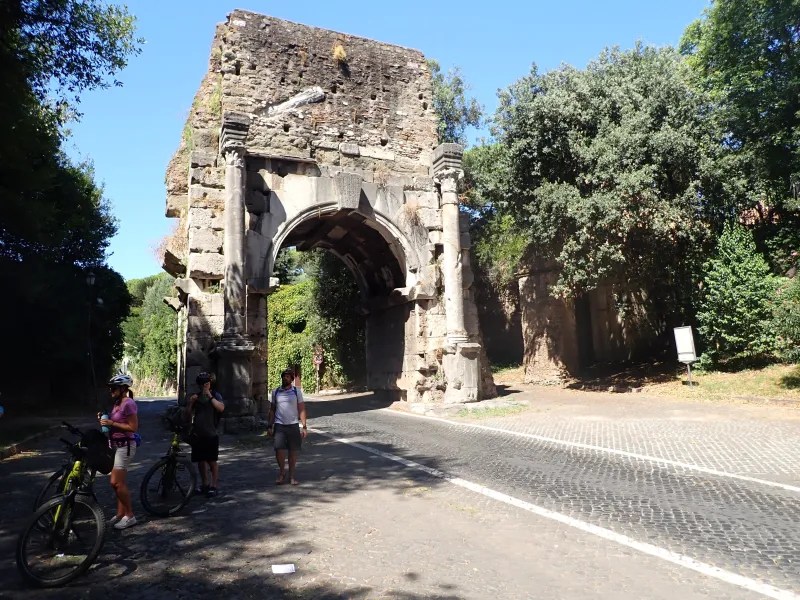
The main road into Rome is no longer the old Apian Way, there is a motorway instead, but the ancient road is still there.

As is the old city wall

But what can I say about Rome that hasn’t already been said, what pictures can I show that havent been shown?

What stunned me was that only an E-bike ride from centre of Rome along the old Apian Way, it was countryside.

So let me leave Rome and head north east to get the bike serviced in Rimini before heading to Croatia.

A short ride north of Rome in Tuscany are the Saturnia hot springs.

It was 32c when I was there, so probably not the best day for a 30c hot spa, but it was still beautiful.

The stop for the night was Lago di Bolsena, Europe’s largest volcanic lake. The shores of the lake is dotted with camping grounds. Even in the peak of summer, there are spaces to pitch a tent.

The riding through southern Tuscany toward Rimini was beautiful – beautiful roads and beautiful villages.

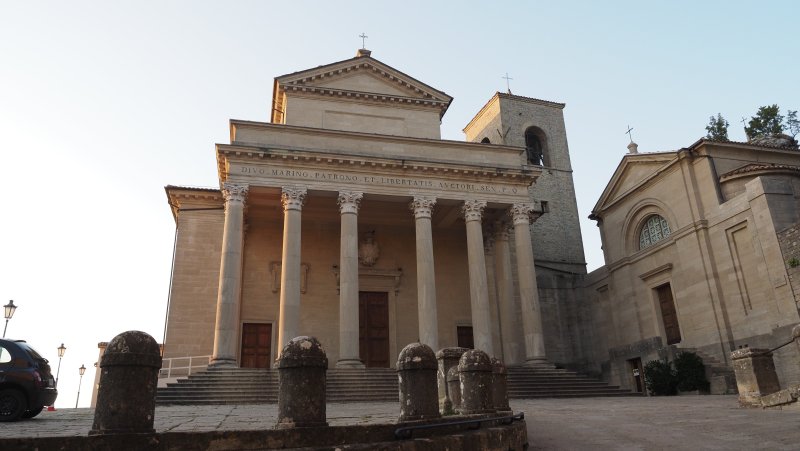
In the peak of holidays there was no accommodation in Rimini but luckily the was up the mountain in San Marino. A short ride from Rimini

The team at Opificio Bike Store in Rimini are fantastic, and I can’t thank them enough. On their first day back from holidays, they serviced, the engine, brakes, and fitted new tyres. Not only that, invited me to the Moto Guzzi Clunhouse for dinner that night.

The club house is an old farm shed between Rimini and San Marino. From the clubhouse, one can see the lights of the city of San Marino perched up on the mountain.

San Marino is in Italy but not in Italy. It claims to be the oldest continuous repblic in the world and is a seperate country. One of the handful of strange micro states within Europe.

With the mighty breva serviced, it was time to head to Anconna to catch the night ferry to Split, Croatia.

Ok ok ok! I just skipped over Rome.

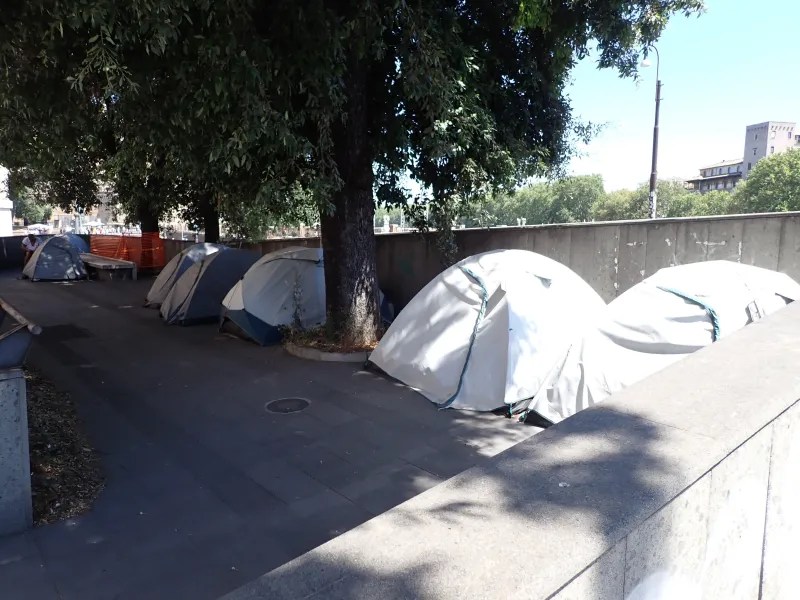
In many ways, August is a good time to visit Rome. Though it’s full of tourists, most of the city due to its population escaping for holidays. Hence, the streets and public transport were easy to get around on. It’s both a beautiful and contradictory place. I’ll let some photos do the talking.